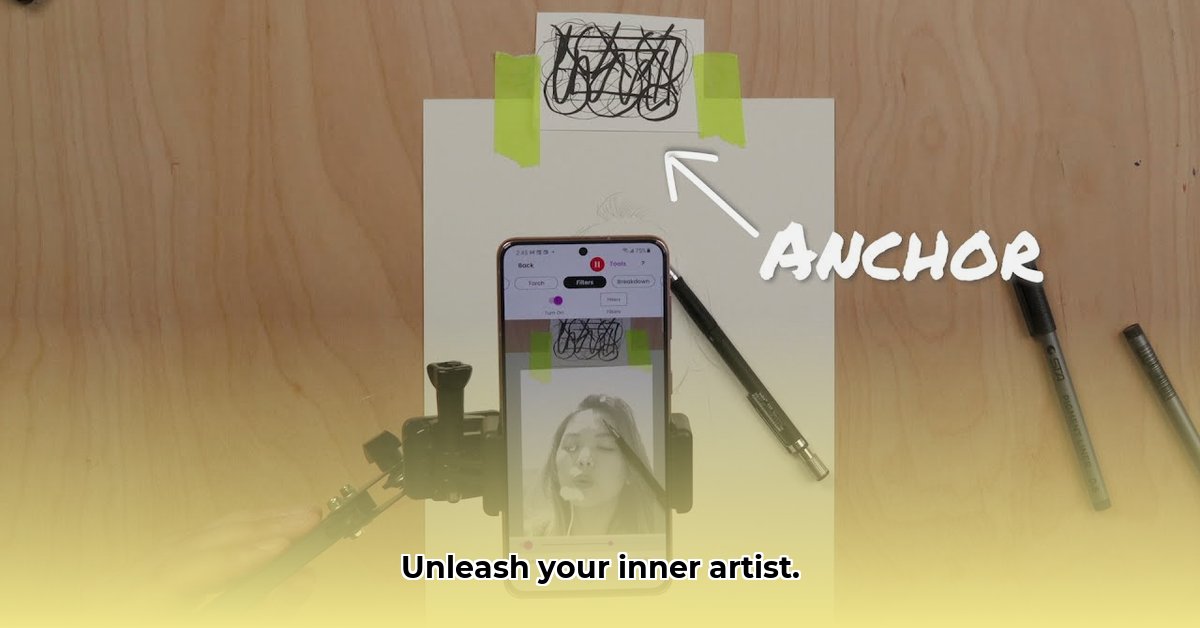
AR Art Revolution: Introducing the Da Vinci Eye
The world of artistic creation is perpetually evolving, and augmented reality (AR) is reshaping how we learn and practice art. Imagine effortlessly projecting a digital sketch onto a physical canvas, tracing its contours with precision, and refining your work in real-time. The Da Vinci Eye AR art projector app promises just that, offering an interactive drawing experience designed to boost your artistic skills. This in-depth review explores its features, performance, and overall effectiveness, comparing it to traditional methods and other AR drawing apps.
Da Vinci Eye: A Deep Dive into Features and Functionality
Da Vinci Eye cleverly merges augmented reality with interactive learning. Its core functionality revolves around projecting digital images onto your drawing surface, enabling tracing and real-time refinement. The app boasts two primary modes: "AR Tracing Mode" and "Classic Mode," each catering to different artistic preferences and skill levels.
AR Tracing Mode: Effortless Tracing for Beginners
AR Tracing Mode is ideal for faithfully recreating existing images. Think of it as a dynamic, adjustable tracing paper. You can tailor the projected image's opacity, controlling the challenge level. The app harnesses sophisticated image analysis to guide understanding of light and shadow interactions, enhancing realism in your recreations. This mode is particularly beneficial for beginners, providing a supportive framework for skill development. Have you ever felt frustrated trying to capture the subtle nuances of shading? This mode simplifies that process.
Classic Mode: A Freehand Approach for Experienced Artists
For those seeking a more freehand approach, Classic Mode offers a traditional digital drawing experience enhanced by AR. This mode empowers users to experiment and express their creativity freely. While providing basic digital drawing tools, it also integrates AR elements that assist with perspective and proportion. This is an excellent option for more advanced artists who prefer a less structured environment for expression. How does the freedom of Classic Mode compare to the precision of AR Tracing Mode? The answer depends on your artistic style and desired outcome.
Usability, Performance, and Device Compatibility
Da Vinci Eye boasts a user-friendly interface, making it easy to navigate and begin creating. However, performance significantly varies depending on the device used. High-end smartphones and tablets deliver seamless AR projection and quick response times, providing a fluid and enjoyable drawing experience. But how does it perform on lower-end devices? This is a critical factor impacting accessibility.
On lower-end devices, lag and responsiveness issues are common. The AR projection might appear jerky, and the app's responsiveness could be considerably slower, hindering the overall experience. This disparity creates accessibility concerns, limiting the app's reach. Optimization for a wider range of devices is crucial to broadening the user base.
Lighting conditions also play a key role. Optimal performance requires bright, evenly lit areas. Harsh shadows or low light significantly impact the accuracy of the AR projection. Similarly, the drawing surface texture significantly alters projection quality, with smooth, matte surfaces producing superior results. Textured paper or reflective surfaces can lead to projection distortions.
User reviews echo this performance variation. Users with high-end devices praise its accuracy and ease of use, while those using lower-end devices complain of lag and responsiveness problems. This feedback highlights the critical need for enhanced performance optimization across a wider spectrum of devices, maximizing accessibility.
Tutorials and Skill Development: A Guided Learning Journey
Da Vinci Eye's tutorials form a cornerstone of its value proposition. They provide step-by-step instructions, breaking down complex drawing techniques into easily digestible segments. Lessons range from fundamental shapes and shading to advanced composition and perspective.
The app promotes improvement in accuracy and skill, a claim substantiated by many user reviews. However, independent validation through rigorous testing is crucial to definitively confirm these claims. The effectiveness of the learning methodology likely varies based on prior experience and individual learning styles. The absence of independent verification limits the strength of these claims significantly.
Da Vinci Eye: A Comparative Analysis
Da Vinci Eye stands out against traditional tools like the camera lucida or tracing paper, offering greater flexibility, adjustability, and digital advantages such as the ability to undo mistakes and experiment with layers. Compared to other AR drawing apps, Da Vinci Eye differentiates itself with its structured learning approach and comprehensive tutorials. While similar AR projection capabilities exist in competitor apps, Da Vinci Eye’s focus on guided learning offers a unique interactive and supportive experience.
Conclusion: A Powerful Tool with Room for Improvement
Da Vinci Eye is a powerful tool, particularly for users with high-end devices. Its intuitive interface, comprehensive tutorials, and unique blend of traditional and digital approaches offer significant benefits. However, the performance disparity across devices and sensitivity to lighting conditions represent areas needing improvement. Addressing these shortcomings would greatly enhance the app’s accessibility and broaden its appeal. For beginners seeking guided instruction, it's a valuable resource. For experienced artists, it offers a unique digital tool to enhance their existing skillset. The future of the app hinges on addressing the performance limitations and providing further verification of the claimed skill development benefits.
⭐⭐⭐⭐☆ (4.8)
Download via Link 1
Download via Link 2
Last updated: Monday, May 19, 2025